

Empires at a single table: Istanbul’s meze culture, where civilizations meet
To truly understand Istanbul, it’s not enough to stroll through the historic districts or see the monumental mosques. You have to sit down at a meze table, where time passes more slowly and the food tells stories.
The culinary journey through time begins in the historic Spice Bazaar, where the air is filled with the scent of sumac, saffron, dried mint leaves, roasted nuts, Turkish delight and pomegranate tea. The Turkish Flavours program deliberately starts the day here: in the legendary Hyen spice shop, participants not only look, but also taste, smell and ask questions. Behind the spices lining the shelves lies the history of entire civilizations.
Founded by Selin Rozanes, the Turkish Flavours team has been organizing gastronomic tours and cooking classes in Istanbul for nearly twenty years, which go far beyond the classic tourist programs. The focus is not only on food, but also on how history, religions and the coexistence of different ethnic groups have shaped the city.
After the spice tasting, the group heads to the harbor and takes a ferry to Kadıköy. Crossing the Bosphorus in Istanbul is also a symbolic journey from Europe to Asia, from one cultural worldview to another. Seagulls circle the ship, mosque domes loom in the background, as the city slowly reveals a new face.
A city that can be understood at the table
The cooking class takes place not in a sterile cooking studio, but in a homely, homey apartment in Kadıköy. Participants don aprons, mortars, wooden spoons and grape leaves are brought out, and the work begins almost immediately. Someone folds phyllo dough, someone mixes the filling, while the kitchen smells of garlic, olive oil and fresh parsley.
According to Sibel Ipeker, guide of Turkish Flavours, Istanbul can best be understood through its food.
“During our cooking classes, visitors can learn about our culture through the food itself, as the Istanbul table tells a lot about our past. When we look at the different dishes, we can see that some were brought by Armenians, Greeks, Jews or even Arabs. In Istanbul, a beautiful mix of all these lives on, and cooking together is the best way to truly understand this rich heritage,” he says.
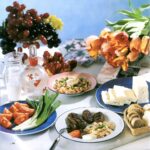
One of the most important characteristics of the meze culture is that togetherness itself becomes the central element of the dinner. Eating is a slow, leisurely and communal experience. It is not built around a single main course, but on many smaller plates that everyone shares with each other.

“Meze culture is not just a form of eating, but a fundamental tool for socializing when we receive guests or are sitting in a restaurant. You sit down at the table, eat the food slowly, and you can talk for hours. With a drink, everything is there on the table in front of you, you don’t have to keep ordering or interrupting the evening. The whole point of it is to eat slowly, drink, and really connect with each other,” says Sibel Ipeker.
History folded into phyllo dough
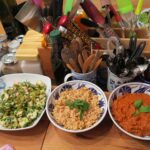
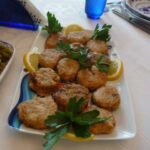
Almost every dish has its own story. Muska Börek, for example, is made from hair-thin phyllo dough and filled with salty feta cheese, dill, and parsley. The triangular, crispy-baked dough evokes Balkan, Greek, and Ottoman gastronomic traditions.
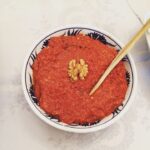
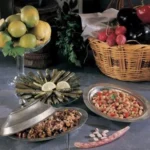
Next to it is Muhammara, a deep red, silky pepper cream that came to Turkish cuisine from the Aleppo region. The combination of roasted peppers, walnuts, and pomegranate syrup is sweet, smoky, and tart at the same time, perfectly showcasing how Levantine and Anatolian cuisines have coexisted for centuries.
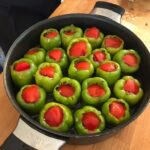
Stuffed Grapevine Leaves are perhaps one of the most well-known Mediterranean heirlooms on the table. Rice, enriched with cinnamon, pine nuts and currants, is carefully wrapped in the leaves, softened in olive oil, and then slowly cooked until done. This dish is a Greek, Turkish, Arabic and Middle Eastern tradition that has been passed down from generation to generation from family to family.
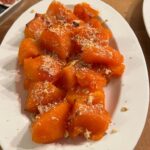
Carrots in Garlicky Yoghurt & Tahini Dressing may seem like a simple dish at first, but the combination of garlicky yogurt and sesame paste actually evokes a gastronomic meeting of the Arab world and Anatolia. The sweetness of the carrots, the nutty aroma of the tahini, and the acidity of the yogurt create a surprisingly harmonious whole.
From palaces to everyday tables
Perhaps the most exciting dish on the menu is Circassian Chicken with Walnuts. The dish has Caucasian roots, but became truly famous in the Ottoman palace kitchens. The thick cream made from boiled chicken, walnuts, and garlic is both rustic and elegant.
“It’s very exciting to observe how dishes take shape over time. Take, for example, the Circassian chicken with garlic and walnuts, which we prepared today. This was originally a classic Ottoman palace dish. However, it has evolved a bit over the centuries; in the past, it was made with something else to give it its creaminess, but today we thicken it with breadcrumbs, so it has moved from the sultan’s kitchens to our everyday lives,” says Sibel Ipeker.
Dessert is no easy task either. Apricots Stuffed with Cream & Pistachio Shavings evokes the world of classic Ottoman sweets. Dried apricots are filled with a thick kaymak and then sprinkled with Gaziantep pistachios. The result is both light and rich, as if the scent of an oriental bazaar had been condensed into one bite.

At the end of the cooking session, everyone sits at the same table. The food they have prepared together is slowly consumed, and the conversations become more and more personal. At the end of the program, participants also receive an apron and a recipe booklet, so they can truly take part of the experience home.
Turkish cuisine has long been extremely popular in Hungary, so such a program can be an especially easy-to-understand experience for Hungarian travelers. The paprika, spicy, yogurt and stuffed dishes evoke familiar flavors in many ways, yet they come from a completely different cultural background.
And perhaps this is one of the greatest charms of Istanbul: that sitting at one table, you feel at once at home and in the middle of a completely different world.